4.10 Economic growth and/or economic development strategies
Trade strategies
Import substitution
Import substitution is a policy to deliberately reduce imports through protectionism. According to this policy, developing countries should produce goods domestically rather than importing them. Import substitution is linked to the infant industry argument, where strategic industries are protected from foreign competition and provided with a domestic market. ‘Infant industries’ can then grow in size and achieve economies of scale that would not have been possible if they were exposed to foreign competition from the start. Import substitution was popular in Latin America between the 1950s and 1980s.
For import substitution to work, the government needs to organise the choice of goods which will be produced domestically, subsidise domestic industry, and adopt a protectionist system.
Advantages:
- It protects jobs in the domestic market as there is no foreign competition.
- It protects local culture and habits by isolating the economy from foreign influence.
- It protects the economy from the influence of multinational corporations.
Disadvantages:
- It may lead to unemployment in the long run if growth is weak.
- The country does not enjoy the benefits of comparative advantage and specialisation so produces goods which could be imported at lower prices inefficiently. This lowers consumer benefits.
- The lack of competition might lead to inefficiency.
- It might lead to high rates of inflation.
- Other countries might retaliate and impose protectionist measures.
Russia’s import-substitution policies in the mid-2010s sought to encourage domestic production in sectors including agriculture and food processing. The food embargo provides a historical example of restrictions intended to shift demand towards domestic suppliers. Source: Stephen Wegren, Effects of Russia’s Food Embargo (2019)
From August 2014, Russia banned specified food imports from specified countries. Stephen Wegren’s 2019 analysis reports food-import values of approximately US$39.7 billion in 2014 and US$28.9 billion in 2017. This decline does not by itself establish the effect of the ban: exchange rates and domestic demand also influence the dollar value of imports. Russia continued to import food, so the figures do not demonstrate overall self-sufficiency. Source: Stephen Wegren, Effects of Russia’s Food Embargo (2019)
Import substitution can give domestic firms an opportunity to expand, but lower imports alone do not show that an industry has become more productive or internationally competitive. Its success should be assessed using evidence on output, costs, quality and the effects on consumers.
Export promotion
Export promotion aims to support economic growth by expanding exports. Policies may improve access to overseas markets, infrastructure, skills, finance and productive capacity. Growth depends on the domestic value added and wider effects of export expansion. Trade liberalisation can support this strategy, but a floating exchange rate and minimal government intervention are not necessary conditions. Governments may also use active industrial policies or manage the exchange rate.
East Asian countries such as Japan and Taiwan pursued export-led growth between the 1960s and 1980s with a combination of policies. These included active government support for targeted-industry investment in machinery and equipment (through the maintenance of low interest rates, coordination of investment and expansion plans, and encouragement of investment of retained profits), and subjecting domestic firms to competition from foreign producers, which avoided inefficient production. The gradual accumulation of capital (both physical and human) has allowed these countries to shift their competitive advantage from labour-intensive to capital-intensive manufacturing over time, which helps to enhance income levels.
Disadvantages:
- The success of the ‘Asian tiger’ economies has led developed countries to enforce more protectionist policies against manufactured products from developing countries, as workers in developed countries argued that they could not compete against imports from low-wage workers in developing countries. These protectionist measures effectively increased the price of developing countries’ exports, and therefore removed their comparative advantage.
- Multinational corporations might become too powerful within the country to influence the policies to their own favour.
- Free-market, export-led growth might increase income inequality.
Brazil implemented a successful policy of import substitution from the 1930s onwards, using import licensing, tariffs, quotas, import prohibitions, overvalued exchange rates, and direct government investment in key industries. However, the country later began to use export promotion in order to bring about a more efficient allocation of resources by encouraging competition.
Brazil experienced economic stagnation between 1962 and 1967. A new military dictatorship which took power in 1964 aimed to modernise Brazil in part through export promotion; it reformed and simplified the foreign-exchange system, and adopted measures to promote exports.
Between 1968 and 1974, Brazilian exports increased at an annual rate of 27%, from $1.9 billion in 1968 to around $8 billion in 1974. This coincided with extremely high rates of economic growth, where GDP grew at average annual rates of 10%. At the time, world prices for goods like coffee, sisal, sugar, cotton, cocoa and meat were increasing; as soya prices went up in the world market, the Brazilian soya harvest multiplied by a factor of 10 from 1966 to 1973, most of which was aimed at international markets.
Economic integration
Bilateral and regional preferential trade agreements grant developing countries access into the markets of developed countries with low trade barriers. Due to closer trade links, developing countries may also be able to attract more foreign direct investment. Examples of preferential trade agreements include the APEC (Asia-Pacific Economic Cooperation) and the LAFTA (Latin America Free Trade Association).
Advantages:
- Larger export markets allow developing countries to gain economies of scale and encourage diversification and therefore reduce dependence.
- Integration encourages regional cooperation, which may offer crucial transport links to landlocked countries.
- FDI may be more likely as foreign companies will benefit from larger market sizes.
- Free movement of labour might provide opportunities for workers to work in other member countries.
- Free movement of capital provides opportunities for companies to invest in other countries.
- Political stability might improve, leading to higher levels of investment.
- Competition with lower-priced goods from other bloc members leads to greater efficiency.
- Consumers might have access to cheaper imported goods and services.
Disadvantages:
- The role of the WTO might be undermined.
- Trade with countries outside the bloc may be more difficult.
- Unemployment may increase as less efficient companies are unable to compete with other member countries.
- Trade diversion might occur (Trade diversion is a HL topic).
More recently, Brazil has begun to take a policy of economic integration. Since 2016, the government has worked to increase Brazil’s participation in the Organisation for Economic Cooperation and Development (OECD), leading to its application for membership in May 2017. In 2019, it was already the non-member country with the highest degree of compliance to OECD standards. In 2020, it is a Key Partner of the OECD, meaning that it is not a member but contributes to the OECD’s work and has access to partnerships in OECD bodies.
Brazil enjoys significant levels of trade with the EU; the EU is Brazil’s second-biggest trading partner, and accounts for 18.3% of its total trade. Brazil exports primarily primary products to the EU, including foodstuffs, beverages, and tobacco products; for example, 16.3% of EU imports of tobacco products are from Brazil. Brazil is the biggest exporter of agricultural products to the EU.
On 28 June 2019, the EU and Mercosur—then comprising Argentina, Brazil, Paraguay and Uruguay in these negotiations—reached an agreement in principle on the trade part of an association agreement. This was not a trade agreement signed and in force in 2018. The historical proposal aimed to:
- Increase bilateral trade and investment while lowering trade barriers, both tariff and non-tariff.
- Create more stable rules for trade and investment.
- Promote joint values like sustainable development, strengthen workers’ rights, fight climate change, and uphold high food safety standards.
Trade strategy: Import substitution
| Advantages |
|---|
|
| Disadvantages |
|
Trade strategy: Export promotion
| Advantages |
|---|
|
| Disadvantages |
|
Trade strategy: Trade liberalisation
| Advantages |
|---|
|
| Disadvantages |
|
Trade strategy: Multilateral agreements (via World Trade Organisation)
| Advantages |
|---|
|
| Disadvantages |
|
Trade strategy: Bilateral and regional trade agreements
| Advantages |
|---|
|
| Disadvantages |
|
Trade strategy: Diversification
| Advantages |
|---|
|
| Disadvantages |
|
Diversification
LEDCs can diversify their exports to reduce volatility in export revenue. Countries can diversify within the same sector (primary, secondary or tertiary), but produce different products in addition to its existing range of exports. In addition, countries could shift into activities with higher value addition, such as roasting in the case of coffee.
However, this strategy might be difficult to achieve. For example, countries seeking to diversify into manufactured goods from agricultural goods might face higher tariffs, and a highly qualified workforce is needed to produce more complex products; this may be difficult in LEDCs with poor education systems. In addition, diversification violates the concept of the comparative advantage, and might cause countries to fail to capture economies of scale in production.
Chile enjoys abundant copper deposits, meaning that copper is one of its main exports. However, over time, Chile has reduced its level of resource-dependence on copper, meaning that it now accounts for only 50% of Chilean exports rather than the majority.
Chile’s export diversification strategy had two parts:
- It diversified within the copper industry by increasing the value added through improving the quality of copper extraction and exporting processed products.
- It diversified across industries, by developing fisheries and increasing the exports of high value-added agricultural goods such as fruit and vegetables and wine production.
At the same time, the Chilean government set up mechanisms that allowed it to save the rents from mineral extraction and reinvest that money in promoting growth.
These policies have meant that Chile’s levels of growth and per capita income are significantly higher than those of Zambia, a country with similar population size and levels of copper deposits but which did not diversify its exports due to its landlocked nature and high trade and transportation costs.
Social enterprise
Social enterprises are organisations which aim to achieve social objectives. They tend to aim to overcome a global or local issue such as poverty or lack of healthcare.
Solar Sister brings clean energy technology to remote communities in rural Africa through a women-centered sales network. They encourage local African female entrepreneurs to create sustainable businesses supplying sustainable energy to their communities, by offering training and support. They recruit, train, and support new entrepreneurs, and supply them with durable, affordable solar-powered products and stoves; these entrepreneurs can earn income by selling products to those without power, benefitting both the individual and the community.
Solar Sister have reached around 1.5 million people across Africa, and by supporting entrepreneurs, they improve both the household income of the female entrepreneurs that they support and the health and education of their family and community. Clean cookstoves and solar light promote better health, and reliable light to study by at night allows children to progress their education. The scheme also improves gender equality, as income allows women to contribute to household earnings and gain financial independence and respect from their families.
An earlier Solar Sister target was to reach around seven million people in five countries by 2022, through around 10,000 entrepreneurs, 95% of them women. These were targets. Its 2022 annual report instead reported reaching over 3.7 million people and supporting over 8,500 entrepreneurs by the end of that year; these are organisation-reported outcomes.
Find out more about Solar Sister at https://solarsister.org/.
Social enterprise and economic development
How social enterprises can promote development
1) Provision of goods and services
A social enterprise may serve households that other firms find unprofitable to supply. Revenue from customers, together with grants or other support where available, can finance continued provision. This can improve access to services, provided that prices remain affordable to the intended users.
2) Employment and skills
Some social enterprises provide training or employment to people who face barriers to work. Paid employment raises household income, while training can improve future earning opportunities. The development benefit is greater where these workers would otherwise have difficulty finding work.
3) Reinvestment in the social objective
Using a surplus to improve the service or extend it to more users can support development beyond the initial project. Trading revenue may also reduce dependence on repeated donations, although it does not remove the need for financial support in every case.
Limitations
There can be a conflict between affordability and financial survival. Charging a low price helps users but may leave insufficient revenue to cover costs. An enterprise dependent on grants may have to reduce its activities if that funding ends.
Access to finance can also limit expansion. Investors seeking high financial returns may be unwilling to fund an organisation whose main objective is social. Small projects can make a substantial difference to their users while reaching only a small proportion of the population.
Finally, social aims need to be assessed against results. Employment created, access improved and benefits to disadvantaged groups matter more than the existence of a social mission alone.
Market based policies
Trade liberalisation
Trade liberalisation is a very different concept compared to import substitution or export promotion. In the latter two, the state plays an active role in promoting strategic sectors, while trade liberalisation attempts to open up markets for free trade without government intervention.
Privatisation
Privatisation is the sale of publicly owned firms to the private sector. Free market economists argue that privately owned firms, which have a profit-maximisation incentive, will be more efficient, and will therefore increase the economy’s potential output. This is because private firms do not have objectives such as the maintenance of employment or the provision of services to difficult-to-access markets.
However, it is difficult for developing countries to design an effective process of privatisation. Furthermore, some goods and services might need to be provided by government-owned firms to ensure that everyone is able to access them. For example, a privately-owned infrastructure firm might not build roads to very remote areas as it is unlikely to make profit doing so.
Deregulation
Deregulation means the government reduces regulatory constraints in the market. High levels of government regulation might increase firms’ costs of production, thereby reducing output and the profits that firms have available for investment.
However, deregulation may lead to poorer working standards or other malpractice by firms, such as debt-driven growth or damage to the environment; deregulation might therefore mean that growth occurs at the expense of development.
Trade liberalisation
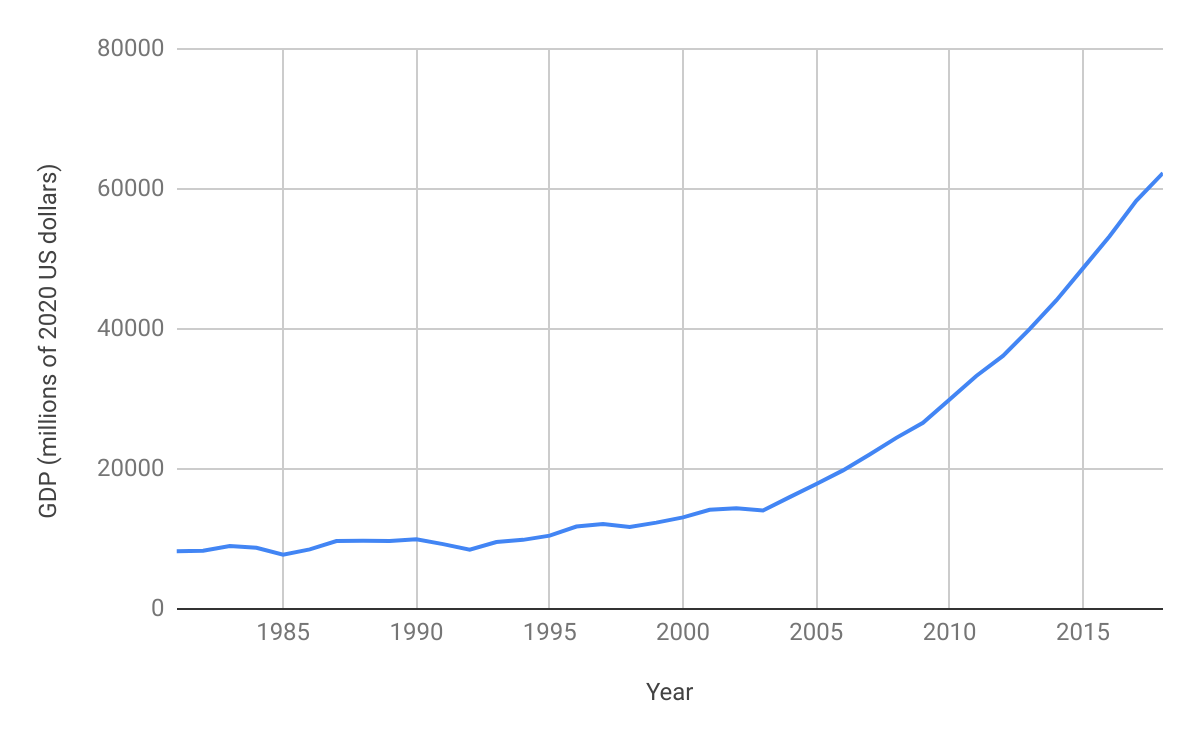
Following an economic crisis in several developing countries in the 1970s and 1980s, the World Bank and IMF recommended Structural Adjustment Programmes (SAPs), which included the reduction of trade barriers and opening of international trade. Ethiopia adopted its SAP in 1992; this led to significant trade liberalisation. From the early 1990s, tariffs were reduced progressively; at the same time, the Ethiopian government also carried out extensive improvements to road infrastructure via the Road Sector Development Programme, which was intended to improve connectivity throughout the country.
The combination of this improvement in road infrastructure and removals of barriers to trade has contributed to a steady increase in Ethiopia’s GDP since the 1990s, as can be seen in the graph below.
Privatisation and deregulation
The Ethiopian government announced plans to privatise several industries, as part of a push towards economic liberalisation; although Ethiopia is one of Africa’s fastest-growing economies, it is one of the most state-controlled in the continent.
The government’s June 2021 proposal was to sell a 40% stake in Ethio Telecom, the biggest telecoms company in Africa in terms of number of customers in a single country. To promote competition in the telecoms sector, it also planned to auction spectrum to two other telecoms companies.
The wider plans also envisaged privatisation in energy, shipping and sugar, alongside a domestic stock exchange. A proposal does not establish that a sale was completed. The Ethiopian Securities Exchange subsequently launched on 10 January 2025.
Interventionist policies
Interventionist policies aim to improve the inclusivity of economic growth; that is, they insure that poor people benefit from economic growth. They should be aimed at the sectors where poor people tend to work, the areas where poor people tend to live, the factors of production which poor people possess, and the products which the poor consume.
Redistribution
Redistribution is an effective tool in developed countries; however, in developing countries government revenue from taxes is limited, so they have less ability to raise money to redistribute.
Transfer payments
Transfer payments refer to payments made by the government to individuals, for which no good or service is exchanged. Governments have to allocate spending between public goods such as health and education which lead to long-term reductions of poverty, and transfer payments, which reduce poverty in the short-run.
Some governments in developing countries use conditional cash transfers (CCT), which aim to reduce poverty by making transfer payments conditional on the actions of the person who receives the money, for example school attendance or vaccinations.
CCTs therefore combine the short-term benefits of transfer payments with the long-term benefits of investment in public services.
Minimum wages
Minimum wages is the “minimum amount of remuneration that an employer can legally pay a worker”. Minimum wages aim to protect workers from low pay and ensure that firms’ profits are shared equally. Minimum wages can therefore be used to alleviate poverty and inequality.
However, there are issues with the use of minimum wages:
- Much employment in developing countries is in the informal sector, where workers are not contracted and therefore do not receive a minimum wage.
- In the formal sector, there are issues with compliance and enforcement.
- Minimum wages might lead to employers laying off workers, leading to an increase in poverty.
Redistribution and transfer payments
South Africa has one of the highest levels of inequality in the world. The top 20% of the population holds around 68% of income, while the bottom 40% has 7% of income. However, the South African government has tackled these high levels of inequality through progressive fiscal policy, focusing on higher social spending, targeted government transport, and affirmative action.
These policies have been successful:
- The policy increases the per capita income of the bottom 10% from R 200 per year to R 2,131 per year.
- 87% of the personal income tax paid comes from the top 10% of society.
- Transfer payments lift the income of the most disadvantaged in the poorest 10% of society by up to 10 times. Transfer payments include child support grants, old age pensions, free basic services, and disability grants.
- The bottom 50% of society receive 54% of spending on health and education.
The World Bank estimates that fiscal policy reduces South Africa’s Gini coefficient by approximately 22.7%. Before fiscal policy, it is estimated that South Africa’s Gini coefficient would be around 0.771; after the impact of fiscal policy, it is 0.596. It also reduces the share of the population living on less than $2.50 a day, from 46.2% to 39.0%.
Using the estimates quoted above, the absolute fall in the Gini coefficient is 0.771 − 0.596 = 0.175. The relative reduction is (0.175 ÷ 0.771) × 100 ≈ 22.7%. These are the historical estimates used in this case, not a current measurement of inequality.
Minimum wages
South Africa first instituted a minimum wage in January 2019. The minimum wage was set at R 20 per hour, or R 3,500 per month, depending on the number of hours worked. In March 2020, it was increased to R 20.76 per hour, in line with inflation. Farm workers, domestic workers, and workers employed on public works programmes are entitled to lower minimum wages, of R 18.68 per hour, R 15.57 per hour, and R 11.42 per hour respectively.
The minimum wage has benefitted a large proportion of the population who now enjoy higher take-home wages. However, studies have shown that the minimum wage is set far below the living wage level. In most Black South African households, only one family member works, supporting an average of 3.9 people. Research by the Pietermaritzburg Economic Justice and Dignity Group finds that even in the best case minimum wage scenario a household with one working family will only have R 3,360 in income per month, leaving it R 780 short of being able to meet the costs of food, transport, and electricity. This is before the addition of any other household expenses like education, hygiene and insurance. The situation is even worse for workers on lower levels of the national minimum wage, such as farm workers and domestic workers.
Provision of merit goods
Merit goods are goods which are beneficial to the consumer, but whose benefit might be undervalued. They tend to be underprovided.
Education programs
Quality education will raise the country’s human capital, leading to a growth in its productive potential. However, financing education in developing countries is difficult, and poor families may not see the benefit in education and might prefer to keep their children in work.
Health programs
Healthcare raises a country’s human capital by reducing the amount of time that workers spend off work due to ill health. However, instituting a healthcare service is expensive, especially given the limited resources of governments in developing countries.
Infrastructure
Infrastructure, such as energy, transport, and sanitation, is vital for development. Without it, developing countries will not be able to increase their production of primary goods, nor shift to the production of manufactured goods. A lack of infrastructure also limits the degree to which countries are able to export goods. However, providing appropriate infrastructure is challenging for governments of LEDCs which may have limited resources and knowledge.
Education programs
In Zambia, 91.8% of the population complete primary school, although there are some regional disparities, and girls tend to be at a disadvantage. Girls tend to drop out of upper primary and secondary school at a higher rate, and transition from primary to secondary school at a lower rate. Outcomes tend to be slightly poorer at the secondary school level; transition rates from primary to secondary school are low, at around 67.5%.
Historically, fees at secondary level were a barrier to continued schooling in Zambia; this did not mean that secondary education received no public funding. From January 2022, the government extended free education through secondary level in public schools. Families may still face associated costs, and enrolment gains can put pressure on classrooms, staffing and learning materials.
Health programs
The government provides the majority of health care in Zambia, on a free-of-charge or cost-sharing basis. The government spends around 5% of GDP on health care. However, Zambia has fairly poor health outcomes, life expectancy at birth averages 62 years, and the probability of dying under five per 1,000 live births was 58 in 2018. This is in part because the country does not have sufficient resources; in 2011, there were 0.06 doctors, and 0.77 nurses and midwives per 1,000 people in the population.
Infrastructure
In 2018, a report by the Infrastructure Consortium for Africa found that between 2013 and 2017, the average annual funding for infrastructure development in Africa was $77 billion, the majority of which has come from African governments.
For example, Nigeria is planning to spend $20 billion on infrastructure between 2020 and 2030, in order to meet the future needs of the country. This comes after an IMF report in 2018 which found that public investment in Nigeria was lower and of worse quality than in other emerging market economies, which could pose significant barriers to GDP; the IMF report estimated that narrowing this gap could raise GDP by 0.75%.
Applying diagrams to development strategies
Provision of a merit good
Where consumption creates an external benefit, MSB lies above MPB. In Figure 4.10A, the market provides Qm, where MPB = MPC. Assume no production externality, so MPC = MSC. The socially optimal quantity is Qopt, where MSB = MSC. The market underprovides the good.
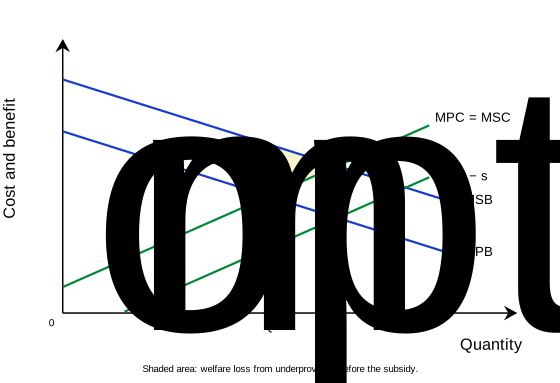
A subsidy to producers can lower the price paid by consumers and increase provision. In the illustrated model, a per-unit subsidy equal to the marginal external benefit at Qopt shifts the supply curve to MPC − s. The new private-market equilibrium is at Qopt. The subsidy changes private incentives; it does not remove the external benefit or change the underlying MSC curve.
Government expenditure is the subsidy per unit multiplied by the quantity supplied. In the simple model, the gain from correcting underprovision is the original welfare-loss triangle, after accounting for the subsidy as a transfer. Administrative costs and the wider costs of raising tax revenue can reduce this gain.
From provision to development
Increasing the quantity provided does not by itself establish that the intended households receive a better service. Access, service quality and the availability of trained staff influence the effect on living standards. If supply cannot expand, financial support may raise provider receipts more than the quantity available.
Where better provision improves health or skills, it can raise labour productivity over time. The resulting increase in productive capacity can be shown by an outward shift of LRAS, as in Figure 3.7A. The externality diagram explains the market allocation; the aggregate-supply diagram explains the possible effect on the economy's capacity. Each should be linked to the particular mechanism being discussed.
Inward foreign direct investment (FDI)
The meaning of FDI and MNCs
Multinational corporations (MNCs) are companies that conduct economic activities in more than one country. MNCs expand their production in foreign countries through foreign direct investment (FDI), where they either set up new production (as subsidiaries or joint ventures with a local firm), or acquire existing firms in the destination or host country. The MNC retains an influence or control in the management of its investment, and is different in nature compared to portfolio investments like stocks and bonds.
Foreign direct investment (FDI) is a long term investment by multinational corporations in a foreign country. The investment shall increase the production of a country.
Reasons for MNCs to expand into LEDCs
The reduction of transportation costs has contributed to the increase of footloose industries, where raw materials and resources can be transported easily, and thus production can be located at any place. MNCs may choose to expand their production in LEDCs due to the following factors:
- Availability of raw materials for extraction, such as oil and metals (note that the further processing of raw materials may be located elsewhere)
- Lower factor input costs, due to lower living standards and wages
- Lax regulatory regime (such as labour safety or environmental standards)
- Avoiding tariffs by locating production at the product destination
However, due to the long-term nature of FDI (setting up production lines often entails fixed costs), MNCs may be subject to expropriation by the host LEDC country. For instance, the Venezuelan government confiscated the assets of private oil service companies in 2009.
Characteristics of LEDCs that attract FDI
Since production does not need to be tied to any particular location, MNCs usually weigh costs and benefits of a location when deciding where to place FDI. In practice, some LEDCs are more successful in attracting FDI than others (for instance, China, India, and Brazil are among the largest host countries for FDI), and the following factors contribute to attracting FDI:
- Macroeconomic and political stability
- Well-defined and enforced property laws
- Low cost factor input
- Well-educated, but at the same time low-cost labour force
- Favourable tax rules
- Regulatory framework that favours profit repatriation (i.e. transfer of profits back to the MNC’s home country)
- Government concessions to MNCs
Advantages and disadvantages of FDI for LEDCs
FDI can be a double-edged blade for the host countries. While the host country receives investment, whether this can contribute to development depends on the exact nature of the FDI.
Advantages of FDI
(1) Transfer of technology and organisational know-how
The host country can learn from MNCs, especially when the FDI is in the form of a joint venture between the host country and the MNC. E.g. management capability, operation excellence
(2) Increases export competitiveness when adopting more efficient production practices of MNCs
(3) Increases level of employment and wages
FDI can generate more employment if it is in labour-intensive industries.
(4) Lower prices and better products
Lower prices and better products for domestic consumers, if the goods produced are aimed at the host country’s markets.
(5) Increases government revenue
(6) Enhances economic stability compared to other forms of investments in stocks and bonds
FDI is more stable than investment in the form of stocks and bonds. The latter can easily leave a country at the first sign of trouble. FDI in comparison is more stable and invested with long-term prospects in mind.
(7) Provision of necessary capital
FDI can provide the necessary capital to lift LEDCs out of the poverty trap e.g. An increase in investment increases productivity, hence increases income.
Disadvantages of FDI
(1) Loss of profit for domestic firms
(2) Diversion from investment
Investment is necessary for capital formation for development. If the goods produced by the MNC are aimed at domestic markets (e.g. tobacco or soft drinks), the MNC will try to stimulate consumption through marketing; this can reduce the amount spent on investment and hence reduce capital formation for development.
(3) Low employment generated
FDI focuses on mechanisation might not generate much employment opportunities. E.g. FDI in oil extraction usually employs very few workers.
(4) Limited contribution to public finances & local growth
To encourage FDI, governments in LEDCs often offer tax concessions and other forms of assistance to MNCs. Income generated from the activities may not be taxed, and a significant portion of the profits may be repatriated to the MNC’s home country, and are not invested for the development of the host country.
(5) Influence on government policy
MNCs may wield a large influence on a host country’s government, and lobby or even bribe officials into enacting policies that favour the MNCs; these might adversely affect development (e.g. lax environmental laws).
Africa has received significant inward FDI from China. Between 2003 and 2018, Chinese FDI increased from $75 million to $5.4 billion, reaching mainly South Africa, the Democratic Republic of Congo, Mozambique, Zambia, and Ethiopia.
A related but distinct form of Chinese finance is infrastructure lending. A new railway in Kenya connecting Mombasa and Nairobi, which opened in 2017, was financed mainly by China’s EXIM Bank, which covered more than 90% of the $3.6 billion cost. The railway cut travel times between the cities in half, meaning that it was a significant improvement to Kenya’s infrastructure. The Bank also provided 85% of the funding for a $475 million railway in Addis Ababa, serving 4 million of the city’s residents.
The railway loans described here are debt finance, not evidence of foreign direct investment. FDI requires a lasting ownership interest and significant influence in an enterprise; a bank loan does not establish that relationship by itself.
Foreign aid
Aid is the flow of capital from developed to developing countries that is non-commercial in nature. There are various types of aid dependent upon the aid provider, different natures of aid and how it is used, numerous parties involved, and differing natures of repayment and conditions associated. The table below summarises the types of aid:
In 2017, the US government spent around $46 billion on foreign aid, with around 40% of that budget going to Afghanistan, Iraq, Israel, Jordan, Ethiopia, South Sudan, Kenya, Pakistan, Nigeria, and Uganda. For example, Ethiopia received $943 million in foreign aid from the US, $332 million of which was used for emergency response, $162 million for HIV/AIDS prevention and treatment, and $140 million was allocated for developmental food aid and food security assistance.
| Aid Provider |
|
| Nature and use of aid |
|
| Parties involved |
|
| Nature of repayment |
|
| Conditions associated |
|
NGOs refers to non-governmental organisations that exist to promote economic development, humanitarian ideals and/or sustainable development. In contrast, the governments of MEDCs have various motivations on why to give aid:
- Humanitarian: Donor countries give humanitarian aid to alleviate the immediate needs of recipient countries for moral reasons
- Economic: Donor countries may wish to access the markets or resources of the recipient countries, and provide aid to build transport infrastructure to access these resources. In addition, donor countries may wish to open up new markets or raise the level of its own exports through providing tied aid to LEDCs. LEDCs might be forced to use the aid money to buy goods and services from MEDCs.
- Political: MEDCs may use aid as an effort to build closer political ties to LEDCs, which then allow MEDCs to gain more political support on worldwide matters.
Concerns with and criticisms of the work of NGOs:
- NGOs rely on funding which comes from a variety of sources; these sources might limit the effectiveness of NGOs by limiting their independence.
- If there are many NGOs operating in a single country, there might be significant waste of resources.
- NGOs might have political or religious bias that either affect their activities or affect those they are helping.
- NGOs are unaccountable.
- NGOs have been accused of spending too much money on promoting their activities.
Debt relief
Debt relief refers to a reduction in the burden of servicing existing debt. Creditors may cancel part of the debt, reduce the interest charged or agree to repayments over a longer period. Extending repayment dates can reduce immediate payments without cancelling the amount owed.
How debt relief can promote development
1) More funds available for public services
Debt servicing uses government revenue that could otherwise finance education, healthcare or infrastructure. Lower payments can allow the government to increase these expenditures without raising taxes or taking on an equivalent amount of new borrowing. Better access to these services can improve living standards and labour productivity.
2) Less pressure on foreign currency
Repaying debt denominated in foreign currency requires foreign exchange. Reducing these payments can leave more foreign exchange available to pay for essential imports and capital goods. This can be particularly useful where a shortage of imported machinery or inputs restricts production.
3) Improved conditions for investment
A large, unsustainable debt burden creates uncertainty about future taxes and public spending. Reducing that burden may improve confidence and encourage investment. The effect depends on whether investors believe that the country's debt can remain manageable.
Limitations of debt relief
1) Use of the funds released
Lower debt payments do not ensure higher spending on development. Funds may be diverted through corruption or used on projects with low social returns. Public scrutiny and effective budgeting influence how much benefit reaches households.
2) The causes of indebtedness may remain
A country may accumulate new debt if export earnings remain unstable, tax collection is weak or spending repeatedly exceeds available revenue. Debt relief reduces an existing burden; it does not by itself remove these causes.
3) Agreement and conditions
A country may owe money to several creditors with different interests. Reaching agreement can delay relief, and some creditors may refuse to participate. Conditions attached to relief can support better management, but may also restrict the government's choice of policies.
Debt relief is therefore more likely to support lasting development when the reduction in payments is substantial, the funds are used effectively and future borrowing remains consistent with the country's ability to repay.
Evaluation of foreign aid
The issue of whether aid has a positive or negative effect on economic development has been hotly debated. Aid, as it had been administered in the past decades, has had limited effect in reducing poverty, especially in Sub-Saharan Africa. There is an on-going debate about aid, and a summary is shown in Table 4.10.3:
Table 4.10.3 Debate for and against aid
| For aid | Against aid |
|---|---|
| Aid is necessary to provide investment to lift countries out from the poverty cycle. This is especially the case for countries with malarial climates and lack of safe drinking water among other factors, where LEDCs fail to accumulate enough capital for development without any aid support. | Aid correlates with corruption, and does not go where it is intended to. |
| Aid can do more good than harm to LEDCs. The harm occurs from the fact that aid is not being tailored to the need of LEDCs. E.g. tied aid on development project increases the project costs by as much as 30% because LEDCs need to satisfy the requirements set out by donors. | Aid creates aid dependency, and distorts incentives. |
| People in LEDCs should be allowed to find their own solutions | |
| Aid might be given for political reasons rather than on the basis of need; for example, developed countries might give aid to countries which are of political or economic interest to them. Aid may also be linked to the political views of the donor governments. | |
| ‘Tied aid’ is when countries give money for a particular aid project on the basis that the recipient country uses the money to buy goods from the donor country. This might mean that the recipient country is forced to buy more expensive goods and services, and might reduce trade. | |
| Long-term provision of food aid might force down domestic prices, making conditions worse for farmers. | |
| Aid may only be made available if the country agrees to adopt economic policies. | |
| Loans still need to be repaid, leading to indebtedness problems for developing countries. |
Multilateral development assistance
Multilateral aid refers to aid that is given by countries to international development institutions, such as the International Monetary Fund (IMF) and the World Bank.
The World Bank
The World Bank is an international organisation whose main aims are to provide aid and advice to developing countries, as well as reducing poverty levels and encouraging and safeguarding international investments.
The International Monetary Fund
The International Monetary Fund (IMF) is an international organisation with 185 member countries, working to facilitate international trade, foster global monetary cooperation, secure international stability and promote employment and sustainable economic growth.
The IMF uses surveillance, financial assistance and capacity development to achieve its objectives.
Advantages and disadvantages of the World Bank and the IMF
Both the World Bank and the IMF provide essential financial support and technical assistance to developing countries, and have goals which are consistent with international development goals and the Sustainable Development Goals.
However, there are concerns about both institutions:
- Both were established in the US, meaning that they might promote free-market, business-friendly policies which mainly help companies in developed countries rather than their stated goals.
- The head of the World Bank is appointed by the US President, so may have an incentive to direct policy to benefit the US.
- The IMF often sets conditions on countries that take loans from it. These have tended to include policies like trade liberalisation, currency devaluation, and the encouragement of FDI. Since these conditions were enacted, the IMF’s approach has changed, but the concerns remain.
Cambodia receives a large proportion of multilateral development assistance. The Asian Development Bank had committed a total of $2.86 billion in lending, grants, and technical assistance in the country by early 2018, focussing on agriculture, natural resources and rural development, and transport. In 2019, it also endorsed a new 5-year development strategy, including $1.45 billion of spending focussed on agriculture and natural resources management, improved urban and rural living conditions, renewable energy infrastructure, and education and skills development.
The EU and UN also provide multilateral development assistance to Cambodia in the form of grants, which are given primarily to NGOs which work in the country.
Institutional change
Improved access to banking, including microfinance and mobile banking
Developing countries tend to have weak financial systems, which undermine growth and development by limiting investment and savings, as well as the ability to buy and sell goods and services and the ability to access credit.
Availability of credit can have a positive impact on investment. As a large proportion of individuals in impoverished communities work in the informal sector, their access to traditional lending institutions (such as banks) is often difficult because potential borrowers have difficulty proving their creditworthiness (which requires collateral, stable formal employment records and a good credit history).
Micro-credit consists of small loans usually provided to enable poor people to set up very small-scale businesses in developing countries. Micro-credit institutions, which offer very small loans to impoverished borrowers, have played an important role in extending credit to individuals in informal sectors, especially women. Micro-credit has been recognised as an important means in economic development. Muhammad Yunus, together with Graamen Bank who founded the micro-credit institution, were jointly awarded Nobel Peace Prize in 2006 for “their efforts to create economic and social development from below”.
Mobile banking and access to financial services
Mobile banking allows people to access banking services through a mobile phone. Related mobile-money services allow users to store and transfer electronic value, sometimes without a conventional bank account. The services available depend on the provider and the financial system.
Benefits for economic development
1) Lower transaction costs
Travelling to a bank branch takes time and money, especially in rural areas. Mobile services can allow households and small firms to make payments without making that journey. Lower transaction costs make it easier to receive income, pay suppliers and conduct trade.
2) Access to savings and payments
An accessible account gives households a place to hold funds and receive payments. Being able to set money aside can help them meet irregular expenses and maintain consumption when income falls. Where suitable savings products are available, small balances can also be accumulated for future investment.
3) Support for small businesses
Electronic payments can help small firms receive money from a wider range of customers and maintain transaction records. Where lenders accept these records, they may help a business demonstrate its income and obtain credit. Access to a payment account alone, however, does not guarantee access to an affordable loan.
Limitations
People need access to a phone, a reliable network and enough knowledge to use the service. Identification requirements, account charges and transaction fees can exclude low-income users. Where cash is still needed, the local agent must have sufficient cash available for withdrawals.
Fraud, loss of personal information and unreliable service can reduce confidence. Users need clear information about charges and a way to resolve complaints. Mobile services are most useful when these protections accompany wider access.
Microfinance describes the provision of financial services, often in small amounts, to people with limited access to conventional finance. Mobile banking describes a way of delivering services. They can overlap, but they are not the same policy.
Increasing women’s empowerment
Reducing the gender gap by empowering women has a strong impact on economic development. Not only can it make better use of a country’s labour force, but it also has a far-reaching effect on decision-making in families that can lead to better outcomes in living standards. Empowerment in women includes economic, educational and political empowerment.
- Economic empowerment increases women's participation in paid employment.
- Educational empowerment increases women’s productivity, hence increasing their level of income and standard of living.
- Political empowerment increases women’s participation and influence in politics that can lead to more gender-equal policies.
Reducing corruption
Corruption limits the government’s ability to promote economic growth and development by distorting incentives within the government itself and reducing the government’s tax revenue due to lack of trust in the system and bribery.
The IMF suggests a number of measures which might help to reduce corruption. These include:
- Investing in transparency and independent external scrutiny, allowing for oversight over the government.
- Reforming institutions, for example simplifying tax laws.
- Building a professional civil service. Merit-based hiring and pay will reduce corruption and promote ethical behaviour.
- Keeping pace with new challenges as technology allows more opportunities for wrongdoing.
Property rights and land rights
Property rights refers to the legal right to own property/assets, the right to sell property/assets, and the right to benefit from property/assets. The poor tend to lack the property rights to the land that they use for subsistence agriculture or grazing. This means that they cannot use the resource to generate wealth, nor can they improve it so that it is able to provide them with a higher standard of living in the future. Furthermore, property rights would allow the poor to use their assets as collateral to borrow money and thus to improve their standards of living in the long run.
The World Bank argues that there are seven reasons why property and land rights are necessary for growth and development:
- When farmers have land rights, they have the incentive to invest in and improve the land.
- Failure to clarify land rights might lead to the formation of slums in cities. Creation of affordable and livable urban areas therefore requires land rights.
- Property rights protect the environment, as they give people a reason to look after their land.
- Property rights are necessary for the development of the private sector; for example, land is necessary to build factories. If companies can use land for building and collateral, they will also be able to create more jobs.
- Property rights empower women.
- Property rights help secure the rights of indigenous peoples.
- Property rights are vital for peace.
Corruption is a significant barrier to development in Malawi. According to the World Bank’s Worldwide Governance Indicators, published in 2010, Malawi scored in the 42.1st percentile on control of corruption. A survey by Transparency International in 2011 found that around 57% of Malawians believed that corruption in public services had increased in the past three years.
In 2008, Malawi launched the National Anti-Corruption Strategy, which focussed on developing a National Integrity System which aims to promote integrity, transparency and public involvement in the fight against corruption and intensify the prevention of corruption. Malawi has also established an Alternate Dispute Resolution Mechanism within the judiciary, a Business Action Against Corruption board and a Civil Society Action Against Corruption board. These have helped to ensure that public officials who break the law and engage in corrupt practices are prosecuted.
Government intervention versus market-oriented approaches
Market-oriented policies
Market-oriented policies are policies in which economic decisions are made by the private sector (firms and consumers) where government intervention is limited. Market-oriented policies include trade liberalisation (opening up domestic markets for foreign trade), capital flow liberalisation, privatisation of state owned enterprises, and deregulation. Structural adjustment loans provided by the IMF and World Bank in the 1980s and 1990s came with the requirements for implementing market-oriented policies.
Interventionist policies
Interventionist policies focus on the role of the government in providing the right institutions and capital investments in furthering economic development goals. This includes the provision of infrastructure (Essential facilities and services such as roads, airports, sewage treatment that add to the capital stock of the economy and are necessary for economic activity.), investment in human capital, provision of a stable macroeconomic environment conducive for investment, and the provision of a social safety net.
Markets with government intervention
Successful economic development by export-oriented Asian economies suggest that the best way to achieve economic development may be reached via a combination of markets and interventionist policies. Recall that the East Asian economies relied on foreign competition to keep domestic firms competitive, while providing substantial government policy support to develop strategic industries and investment in human capital. While markets can lead to an efficient allocation of resources, the right institutional settings need to be in place to ensure an equitable growth of resources. The experience of a number of Latin American countries has shown that market reforms without strong institutions can lead to inequitable and slow growth.
Table 4.10.4 provides a comparison of the strengths and weaknesses of market-oriented and interventionist policies
Table 4.10.4 Market-oriented policies versus interventionist policies
| Market-oriented policies | Interventionist policies | |
|---|---|---|
| Strengths |
|
|
| Weaknesses |
|
|
Progress towards meeting selected SDGs in the context of two or more countries
You can track progress on all the SDGs worldwide by visiting: https://sdg-tracker.org/.
Goal 1: No Poverty
In 2017/18, 13% of people of working age were in absolute poverty before housing costs, and 20% were in relative poverty after housing costs. This was a decline in after housing costs rates of poverty from 2015/16. Growth in the employment rate in the UK has benefitted the poorest 20% of households; for those households, the employment rate was 7 percentage points higher in 2019 than in 2007/08.
The UK is committed to a policy of full employment and higher wages as the best long-term route out of poverty. At the same time, it spends heavily on supporting those not in work through Universal Credit, as well as on supporting disabled people and those on pensions.
For example, the UK National Living Wage has been increasing steadily since 2000; in 2019, a single person receiving the National Minimum Wage will receive £13,700 a year after income tax and National Insurance, £4,500 more than in 2009/10.
The UK also has an international aid strategy which is committed to tackling extreme poverty by promoting inclusive economic growth, quality jobs and trade, alongside investment in social protection.
Goal 5: Gender Equality
The UK currently has record numbers of women in work, and more women on the boards of private companies than ever before. The UK also takes action to protect women from violence, domestic abuse, and other harmful practices, both domestically and internationally.
For example, the UK published a Gender Equality and Economic Empowerment strategy in 2019 which set out plans to address persistent gendered economic barriers that women face, focussing particularly on low-paid women.
In 2018, 71.2% of working women were in employment in the UK; however, women are still three times more likely to be working part-time than men, and carry out 60% more unpaid care and domestic work. The UK therefore introduced Shared Parental Leave and Pay in 2015, which allows parents to share up to 50 weeks of leave and up to 37 weeks of pay in the first year of a child’s life.
The national gender pay gap in the UK is also decreasing; it reached a record low of 8.6% in 2018.
In 2015, the UK was ranked sixth on the EU Gender Equality Index due to its strong legislation protecting women’s rights and tackling discrimination. The Equality Act 2010 protects people from discrimination in the workplace and in society more generally on the basis of a number of protected characteristics, including gender.
The UK reported a small increase in the percentage of women who experienced abuse at the hands of their partners, from 5.95% in 2016/17 to 6.26% in 2017/18. However, the number of convictions for rape have decreased, despite an increase in reporting of sexual violence.
Goal 7: Affordable and Clean Energy
Since 2015, the UK has been working to decarbonise its economy, cut emissions from electricity generation, and phase out coal power.
Between 2010 and 2018, the average UK household’s energy bills fell by around 14% in real terms. The UK has also introduced a ‘price cap’ on the rates that energy suppliers can charge consumers, saving the average customer in the UK between £75 and £100 per year.
Almost 53% of the electricity that powers homes and businesses in the UK comes from clean sources, including 33% from renewables. The UK’s original 2025 deadline for ending unabated coal-fired power generation was brought forward to 1 October 2024. The energy-share figures in this historical case should not be treated as current data.
Goal 1: No Poverty
Between 2006 and 2015, the proportion of the population living below the national poverty line fell from 51% to 40%. However, incomes among the poor declined, and became more unequal, and there was a rise in unemployment to 25.2% in 2015.
Around ¼ of South Africa’s poorest live in extreme poverty, although poverty rates differ by group and by geographical location. For example, 93% of poor people in South Africa were black in 2015, and 64.2% of blacks were living on incomes below the poverty line. Poverty is also higher among children, those living in rural areas, and those with poorer equality education.
South Africa has aimed to reduce poverty through a progressive wage programme aiming to finance the provision of social assistance and free basic services, including healthcare, subsidised water and electricity, and more free education.
A key part of South Africa’s poverty reduction efforts have been social grants, which now provide assistance to 17 million people. It is estimated that without these grants, poverty would be 8% higher.
Goal 5: Gender Equality
In South Africa, legislative frameworks have been developed aimed at ending all forms of discrimination against women and girls. Representation of women in national parliament has increased from 25% in 1994 to 41% in 2016, and approximately 35% of permanent judges are women. This puts South Africa 8th in the Inter-Parliamentary Union’s rankings for women’s representation in the lower houses or National Assembly. The current Cabinet has the same number of women as men.
South Africa has also made progress towards reducing human trafficking, which decreased from 0.04 for every 100,000 people in 2013/14 to 0.02 in 2015/16.
However, women still have unequal access to income and empowerment. Women fill 44% of skilled posts, and earn 27% less than men. Furthermore, one in five women older than 18 has experienced physical violence. Land ownership is also unequal: women own 34% of individual land ownership.
South Africa is taking significant policy steps to address gender inequality. For example, the Domestic Violence Act 1998 ensures harsh penalties for those who are convicted. South Africa has also passed laws against discrimination, including the Promotion of Equality and Prevention of Unfair Discrimination Act 2000.
South Africa criminalised marital rape in 1993. Its employment-equity legislation also provides protection for equal pay for work of equal value; the relevant 2013 amendment took effect in 2014. The existence of these legal protections should be distinguished from questions about enforcement and remaining inequality.
Goal 7: Affordable and Clean Energy
South Africa is among leaders in the transition to sustainable energy by 2030. In 2017, around 95.27% of the population had access to electricity, an increase from 58% in 1996. The share of renewable energy in final energy consumption increased to 26.2% in 2015, from 14.6% in 2013. However, 77% of South Africa’s energy is still supplied by coal.
South Africa has employed policies to ensure that poor households can afford basic electricity services. It is one of the developing country leaders in moving towards sustainable energy by 2030, and uses solar, wind, hydroelectric and biomass sources. It has also implemented policies to decrease emissions and promote the production of cleaner energy.