1.2 How do economists approach the world?
Economic methodology
Normative economics involves value judgements about what ought to happen. Normative statements cannot be settled by empirical evidence alone, although evidence can inform the judgement. They play a role in evaluating economic policies and commonly use terms such as “should”, “fair” and “too much”.
Positive economics seeks to explain what is happening without value judgements. They can be tested against facts or proven to be right or wrong. For instance, ‘Economic growth was 8% in China from 2010 to 2011’ is a positive statement.
Positive statements can be true or false, and can therefore be fact-checked; normative statements are based on subjective judgements, so cannot be true or false. However, even when positive statements are true, they may be misleading or contain normative assumptions.
The role of positive economics
Social scientists investigate problems using social scientific methods, which is a systematic approach to research questions through objective observation, data collection and experimentation.
Positive economics involves describing and analysing real-world economic relationships and making factual and objective claims.
Economists use simplistic models to explain real-world phenomena; they make certain assumptions, use logic to make hypotheses, and then collect empirical evidence for their theories. When developing economic models, they hold all other factors constant in order to single out the determinant factors behind human behaviour; this is called the ceteris paribus assumption. They then repeatedly test the model; if it is consistent with the real world, the model is confirmed. If not, it is either amended or replaced with another model. A model’s usefulness depends on how well it generalises real world phenomena.
Neoclassical models commonly assume that consumers maximise utility and firms maximise profit, subject to their constraints. These assumptions make analysis more manageable, but are not necessary for every economic prediction. Behavioural economics examines how limited information, biases and other influences affect decisions.
The role of normative economics
When governments develop policies, they use positive economic statements and theories but are also influenced by their own normative values and ideological objectives.
Normative economic decisions are always made while the government implements economic policies, hence we always need to evaluate to what extent the decision is right or wrong. For example, when the government implements a policy to achieve better income distribution in the economy, one of the problems need to be considered is the difference between equity and equality.
Equity focuses on the “fairness” of how income is distributed in the economy, so when we are trying to achieve better distribution of income we mean that the income is distributed fairly to match their nature of work. For example, a doctor should be paid more than a cleaner, as the job nature is more complicated and more skills are required to be a doctor.
Equality is the equal statistical distribution of income, disregarding the job nature, everyone in the economy should be paid equally to ensure the gap between the rich and the poor is minimized.
Economic thought
18th century: Adam Smith and laissez-faire
Until the Industrial Revolution, the prevailing economic theory was ‘mercantilism’. This was the belief that there was a certain finite amount of gold and silver in the world, and how much of this each nation state had was the only measure of its worth. Rulers therefore aimed to maximise exports to earn more gold and silver, and minimise imports to prevent them leaving the country.
In 1776, Adam Smith, known as the ‘father of classical economics’, published An Inquiry Into the Nature and Causes of the Wealth of Nations, known commonly as The Wealth of Nations. Smith’s key observation was that the wealth of a nation is not based on how much gold and silver it has, but rather on the value of the goods and services that it produces; that is, its Gross National Product (GNP).
On the basis of this, Smith argued that instead of accumulating gold and silver, governments should try to maximise the country’s output. This meant increasing production and improving the productivity of labour.
To achieve this, Smith advocated specialisation and the division of labour. He used the example of a pin factory to show that if, instead of each worker producing pins by themselves, the process of production was divided up so workers could specialise in one part of the process, output would increase.
Smith also introduced the ‘labour theory of value’, which argues that the value of a good is the sum of the value of the labour that was used to produce the good.
Another important contribution to economics was the metaphor of the ‘invisible hand’. He observed that private producers choose what to produce based on what consumers want in order to maximise their profits. Their self-interest has the side effect of maximising consumer benefit; the ‘invisible hand’ therefore leads to an optimal outcome for society.
This theory justifies the laissez-faire approach; this is the idea that a capitalist system where production, consumption and trade takes place in free markets with as little government intervention as possible is optimal. When the government does intervene, it should focus on the supply side of the economy, and create conditions for optimal production such as by supporting education.
19th century: Classical microeconomics
Classical economics in the 19th century built on the work of economists like Adam Smith.
David Ricardo agreed with Smith that countries should specialise in the production of specific goods and trade freely to increase output. He developed the law of ‘comparative advantage’, which is the idea that a country which can produce a good at a lower opportunity cost than any other country should specialise in that good.
- Classical macroeconomics and Say’s law
- The neoclassical school of economics
- Marx’s critique of classical economic thought
A French economist Jean-Baptiste Say introduced “Say’s law of markets”. Say’s law argues that production is the source of demand in an economy. Production creates incomes equal to the value of the output, which can then be used to consume other goods and services. By producing goods, producers create the purchasing power for consumers to demand other goods.
Say’s law justifies the conclusion that there cannot be over-production of goods within the economy and that economic growth can be achieved through focusing on production in order to generate demand for products.
Neoclassical economists rejected Smith’s labour theory of value, and argued instead that the value of a good is determined by the value that consumers place on the good, based on the utility that it generates for them. For neoclassicists, value is therefore linked to demand, and utility can be measured and given a monetary value.
Jevons, Menger and Walras introduced the idea of ‘marginal decision-making’, according to which consumers decide if they will consume an additional unit of a good based on how much utility that extra unit gives them, and producers decide whether to produce an additional unit of a good depending on the extra cost of producing it.
Neoclassical economists moved towards more mathematical and scientific study of economics. They built models to explain producer and consumer behaviour which required them to make assumptions; they assumed that individuals are rational, self-interested, fully informed, and are able to make instant judgements about the utility of consumption and production. Individuals optimise in order to seek the best outcome for themselves; consumers maximise utility and producers maximise profit. This is known as rational choice theory.
Neoclassical economics is consistent with Smith’s theory of the invisible hand. While producers rationally maximise their own profits, they compete with each other and therefore produce the best possible products at the lowest possible prices. This leads to optimal outcomes from society’s point of view.
Karl Marx critiqued capitalism, which he saw as only one of many possible methods of production. He suggested that the economic value of a good or service is determined by the total amount of “socially necessary labour” required to produce it, contrasting to the value deriving from a general equilibrium theory of demand and supply.
Marx argued that capitalism would break down, leading to the rise of communism. The free market would not be able to serve the best interests of workers as society’s ability to produce would grow faster than its ability to consume, leading to unemployment.
20th century: Keynesian revolution
John Maynard Keynes critiqued the laissez-faire theory. He argued instead that demand determined the overall level of national income. Particularly, he believed that unemployment after the Great Depression was due to insufficient demand, so the solution was for the government to create demand in the economy by spending money itself and lowering taxes to allow households and businesses to spend more. In contrast, laissez-faire economists believed that unemployment would disappear if left to market forces.
Keynes observed that economies go through business cycles, where periods of growth are followed by periods of recession, and therefore advocated ‘counter-cyclical’ government policies: governments should use expansionary fiscal and monetary policy to increase aggregate demand during times of recession, and contractionary fiscal and monetary policy during times of rapid growth. Fiscal policy refers to changes in the government spending and taxation, and monetary policy refers to changes in the money supply and the interest rate.
Keynesian economics was widely accepted until the 1970s, when reality could not be easily explained by Keynesian theories due to the problem of stagflation - high unemployment and high inflation.
- Monetarism (New Classical Economics)
Monetarism is a school of thought made famous by Milton Friedman. Monetarists believe that the total amount of money in the economy is the main determinant of economic growth.
Monetarists’ main concern is the level of inflation in the economy, which they believe is due to too much growth of the money supply. This, they argue, means that the central bank should not use monetary policy to try to increase aggregate demand, as this will simply lead to inflation.
Instead, the best way to achieve economic growth is through a steady increase of the monetary supply consistent with the rate of growth of national income to avoid ‘too much money chasing too few goods’ leading to inflation.
Monetarists revive the notion of rationalism through the theory of ‘rational expectations’. When governments employ expansionary policies, individuals assume that inflation will occur, and therefore act in a manner that actually causes inflation to occur.
21st century
- Behavioural economics
- Movement from a linear to a circular economy
The neo-classical approach assumes that consumers behave rationally, are self-interested, fully informed, and able to weigh up the balance between the utility of a product and its cost.
However, humans do not necessarily behave in this rational way in the real world. They are not necessarily capable of making intelligent and logical decisions in the way that economic theories assume, and do not have perfect information about prices and utility. Humans also do not act in a purely self-interested way; we care about others.
This has given rise to a branch of economics known as ‘behavioural economics’, which incorporates psychology and recognises that human beings are not always perfectly rational in the way that neoclassical economists assume.
Behavioural economics aims to understand the decision-making process of actual human beings, and uses this to help consumers make better choices and help governments design policies that will encourage people to make better choices.
The fact that economic activity tends to take place within a ‘linear’ economy has led to issues with sustainability, and support for moving towards a ‘circular’ economy.

In a linear economy, we use natural resources from the environment to produce new products. Once they have been used, the products are disposed of into the environment where they create pollution. This type of economy creates huge sustainability challenges due to the over-use of natural resources and unmanageable accumulation of waste.
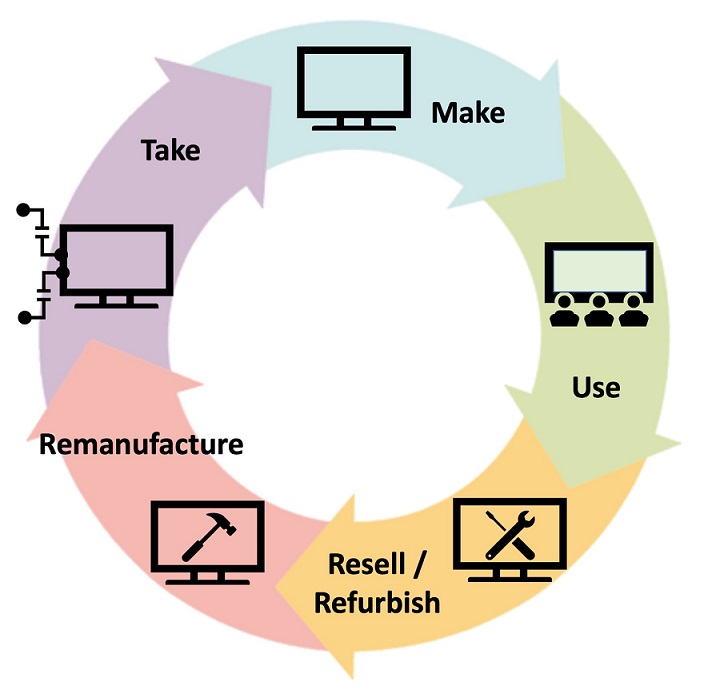
In a ‘circular’ economy, products are designed to be long-lasting, and are made using reuse and recycling of old parts. Instead of waste, there is emphasis on design, maintenance, repair, refurbishment, and remanufacture of products.
A circular economy would lead to sustainability benefits, and may also be beneficial for businesses which would be able to reduce their costs of production and comply with national environmental regulations.
Kate Raworth argues that economics needs to change to take into account the challenges of the twenty-first century. Instead of focusing on economic growth, we need to focus on achieving human rights and sustainability, and take into account the interdependence between the economy, society, and the environment.